
Key Points
- Bamboo is a sustainable resource due to its rapid growth and renewability.
- The use of bamboo for toilet paper helps reduce deforestation.
- Bamboo toilet paper is often produced without the toxic chemicals and harsh additives that accompany traditional toilet paper.
- Sustainable sourcing, minimal additives, and eco-friendly packaging are also hallmarks of top bamboo brands.
As more consumers seek sustainable choices for their homes, the question of whether bamboo toilet paper is truly better for the environment has become increasingly important.
The traditional toilet paper industry is one that takes its toll on our environment. From razing our precious forested lands to chemical processes that pose a threat to our health and that of our waterways, this common household item is often a hazard.
There is an alternative. At ecoHiny, we believe bamboo toilet paper is the solution to the waste and environmental concerns associated with traditional toilet paper.
Once you understand the real environmental impact and sustainability of bamboo toilet paper, it’s likely to help you decide this popular eco-friendly swap is worth making!
What Makes Bamboo Different From Traditional Toilet Paper?
Bamboo grows dramatically faster than trees and requires fewer resources to produce, making it a more renewable alternative for toilet paper.
Bamboo separates itself from traditional toilet paper sources first because it is a grass, not a tree.
Unlike hardwoods, bamboo grows rapidly and regenerates after each harvest, eliminating the need for replanting. When bamboo is cut, its root system remains intact and quickly sends up new growth, allowing for sustainable, repeated harvesting from the same plant.
This incredibly fast growth cycle means bamboo can be harvested much sooner and more often than the decades required for hardwood trees used in traditional toilet paper.
Another key difference lies in bamboo’s fiber structure. Bamboo fibers are naturally long and strong, which allows the production of toilet paper that is naturally both soft and durable. Hardwood tree pulp requires an intensive chemical process to yield the same softness.
You get the same softness and strength you expect from supermarket brands without any of the ecological impact!
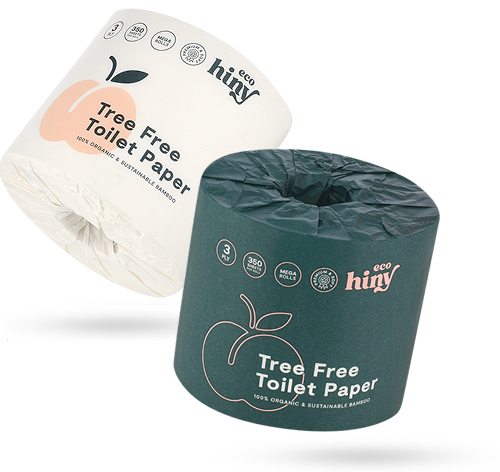
Kind to you, Kind to the planet
Our mission is to save one billion trees by making the switch to ecoHiny.
Does Bamboo Toilet Paper Help Reduce Deforestation?
Yes, and it’s one of our favorite characteristics of this super sustainable plant! Using bamboo instead of hardwood pulp significantly reduces demand for logging.
Toilet paper production is a significant driver of global deforestation, as vast numbers of trees are felled each year to produce tissue products.
It’s estimated that nearly 27,000 trees are cut each year to go into the production of traditional toilet paper. (1). The loss of these trees contributes to habitat loss, release of stored carbon, contributing to habitat loss and the release of stored carbon into the atmosphere.
Much of this demand is met by harvesting virgin wood pulp, often sourced from old-growth forests such as Canada’s boreal region. The Canadian boreal forest is one of the largest intact forests on earth and plays a critical role in carbon storage and biodiversity.
However, traditional toilet paper companies continue to rely on this important ecosystem for their hardwood supply. The National Resources Defense Council, NRDC, reports that Canada’s boreal forests are being cut down at nearly 1 million acres per year, largely to satisfy the paper product industry. (2)
Bamboo toilet paper offers a promising solution by helping offset the world’s dependence on virgin tree pulp. By choosing bamboo-based products, consumers can help reduce the demand for logging in sensitive forest areas and support more sustainable manufacturing.
Opting for bamboo is a meaningful step toward lessening the environmental footprint of toilet paper production.
Does Bamboo Require Fewer Resources to Grow?
Bamboo uses less water and less land, grows without pesticides or fertilizers, and sequesters a significant amount of carbon, thereby reducing its ecological footprint.
Bamboo requires no irrigation to establish and grow, contributing to significant water savings. It also grows in a wide variety of climates and environments and produces more usable material per acre than hardwood trees.
Bamboo also tends to be tough enough to deter disease and resist pests. This means it’s possible for bamboo to grow and thrive without harmful pesticides and fertilizers that make their way to our waters. (3)
Perhaps its greatest pro-planet superpower is bamboo’s ability to sequester carbon.
In an article published in the Journal of Environmental Management, “Woody bamboo forests are renowned for their carbon sequestration, rapid growth, and regenerative ability, ensuring an enormous and sustainable carbon sink with stocks of up to 392 Mg C (or 392 megagrams) per hectare (approximately 10,000 square meters).” (4) For reference, the average carbon sequestration in global carbon sinks is 30 Mg C.
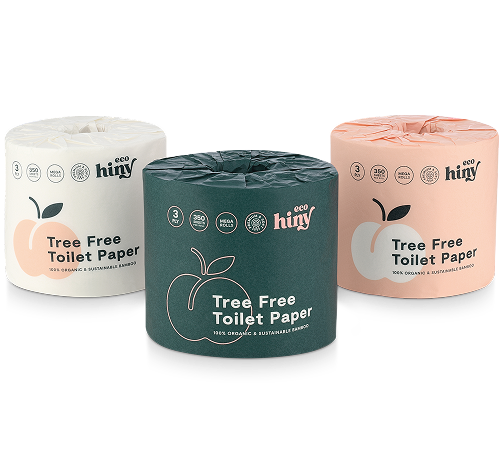
3-ply 250 Sheetsand 2x absorption
Is Bamboo Toilet Paper Safe and Non-Toxic?
Many bamboo toilet papers avoid toxic bleaching processes, synthetic fragrances, and PFAS, making them a safer, non-toxic option.
Some traditional toilet paper brands use bleaching agents such as chlorine bleach to whiten their paper. Additionally, additives like petroleum-based softening agents, fragrances, dyes, and even formaldehyde may be used in traditional toilet paper production. (5)
PFAS, or per- and polyfluoroalkyl substances, are synthetic chemicals widely used in consumer products, including some traditional toilet paper. Known as “forever chemicals”, these substances do not break down easily in the environment or in the body. (6)
The absence of harsh additives makes bamboo toilet paper a gentler, healthier option.
At ecoHiny, we ensure our paper is PFAS-free, plastic-free, and hypoallergenic, providing peace of mind for those seeking a safer choice for their households!
Is Bamboo Toilet Paper Actually Better for the Environment?
Yes! When responsibly produced, bamboo toilet paper is significantly more sustainable than traditional tree-based options due to reduced deforestation, faster regrowth, and fewer resource requirements.
The absence of toxic chemicals also adds to the appeal of bamboo-based options.
Ultimately, when produced responsibly, bamboo toilet paper offers an applicable way for consumers to reduce their household environmental footprint.
By choosing brands that prioritize sustainable sourcing, minimal additives, and eco-conscious packaging, consumers can make a positive impact with their purchasing decisions.
When it comes to the environment, ecoHiny checks all the boxes. Our bamboo toilet paper is made with the environment in mind. From harvest to production to shipping, every step ensures
Source:
- Schwartz, Brian. “Toilet Paper Is a Giant Waste of Resources.” Big Think, 8 Feb. 2023, https://bigthink.com/health/toilet-paper-is-a-giant-waste-of-resources/.
- National Resources Defense Council. “The Best and Worst Toilet Paper Brands for the Planet.” NRDC, https://www.nrdc.org/stories/best-worst-tissue-brands#harm.
- “Bamboo: A Sustainable, Eco-Friendly Plant.” ForestNation, 15 Sept. 2022, https://forestnation.com/blog/bamboo-a-sustainable-eco-friendly-plant/.
- Zhang, Jiale, et al. “Analysis of the Water-Energy-Carbon Nexus in the Pulp and Paper Industry: A Case Study in China.” Journal of Environmental Management, vol. 353, 2024, 120072, https://www.sciencedirect.com/science/article/pii/S0301479725031792.
- Agency for Toxic Substances and Disease Registry. “Toxicological Profile for Chlorine Dioxide & Chlorite.” U.S. Department of Health and Human Services, Sept. 2004, https://www.atsdr.cdc.gov/toxprofiles/tp111-c1.pdf.
- United States Environmental Protection Agency. “PFAS Explained.” EPA, https://www.epa.gov/pfas/pfas-explained.
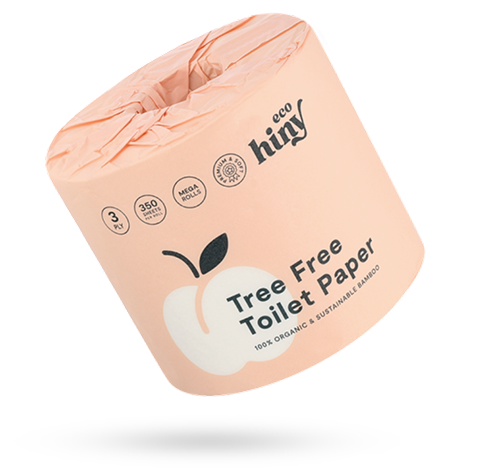
Premium Bamboo Toilet Paper
EcoHiny's 3-ply bamboo toilet paper.
From $39.99
Kind to you, Kind to the planet
Our mission is to save one billion trees by making the switch to ecoHiny.