

Contents
Key Points
- Every day consumer choices increasingly involve a trade-off between convenience and sustainability.
- Convenience often means choosing single-use or time-saving products, which can have significant environmental impacts, including waste generation and increased carbon emissions.
- Sustainability requires actions that minimize environmental harm.
- Balancing convenience and sustainability is important for both consumers and businesses, as consumer preferences can drive market trends and business innovation.
- Adopting sustainable habits does not have to mean sacrificing convenience or comfort. Small, thoughtful changes can have a meaningful impact.
Every choice we make, every product we pick, every habit we hone, shapes our planet’s future. As eco-awareness increases, more consumers are searching for simple, smart swaps that fit smoothly into their routines.
Companies, in turn, are responding with innovations that prioritize sustainability while preserving the convenience of many everyday items.
Finding this balance can make a difference. Our everyday habits add up, and we like to highlight how easy it is to make eco-friendly changes.
What does convenience vs sustainability mean in daily life?
Convenience in daily life means choosing options that save time and effort, while sustainability means making choices that reduce environmental impact.
Today, the stress of choosing between convenience and sustainability is a constant presence in everyday consumer choices. Convenience makes life easier and saves time, often through single-use items, fast food, or on-demand services.
Grabbing a coffee in a disposable cup, driving short distances instead of walking, or shopping for groceries online with same-day delivery are all convenience-driven habits. These options cater to busy schedules and immediate needs but often come with significant environmental costs, such as increased waste, energy consumption, and carbon emissions.
It’s estimated that plastic packaging accounts for approximately 4.5% of total greenhouse gas emissions. Additionally, nearly 8 million tons of plastic end up in our oceans each year (1)
Sustainability involves making decisions that minimize harm to the environment and promote the long-term health of our planet. Sustainable choices might include carrying a reusable water bottle, composting food scraps, biking instead of driving, or supporting local farmers’ markets.
While these actions may require more effort or planning, they help reduce resource consumption and lessen waste. Striking a balance between convenience and sustainability matters because our daily routines affect the environment.
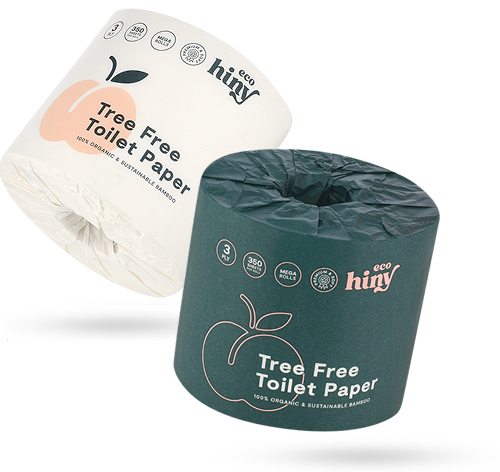
Kind to you, Kind to the planet
Our mission is to save one billion trees by making the switch to ecoHiny.
Why is finding the balance between convenience and sustainability important for consumers and businesses?
Striking a balance between convenience and sustainability is crucial for both consumers and businesses because individual purchasing choices drive market trends. When consumers prioritize eco-friendly options, they signal to companies that sustainable practices matter, encouraging businesses to innovate with greener products and practices.
Conserving natural resources, reducing waste and pollution, creating carbon offsets, and protecting natural habitats are important reasons to achieve balance, not to mention ensuring that businesses remain competitive as new environmental regulations are introduced and public awareness of sustainable options grows.
A recent 2025 study indicated that nearly half of U.S. consumers buy sustainable products. (2) In the long run, combining sustainability with convenience builds customer trust, brand loyalty, and environmental responsibility.
What role do reusable materials play in mindful consumption and sustainability?
Reusable materials, items designed for repeated use, play a key role in mindful consumption and sustainability.
Reusable materials are products intentionally designed for multiple uses rather than single-use disposal, such as cloth shopping bags, stainless steel or glass water bottles, and bamboo utensils. By switching to reusable products, individuals can significantly reduce waste sent to landfills, decrease demand for raw materials, and lower pollution associated with manufacturing and disposal.
5 trillion plastic bags are used each year worldwide, with more than 87% ending up in landfills or the oceans. (3) Raw material extraction is expected to increase by 110% by 2060 if current rates remain. (4) Manufacturing is one of the largest contributors to greenhouse gas emissions. (5)
Benefits of reusable materials include:
- Waste reduction
- Resource conservation
- Long-term cost savings
- Lower carbon footprint
- Promoting mindful habits
Integrating reusable materials into daily routines means consumers play an active role in reducing environmental harm and fostering a sustainable, more eco-conscious mindset.
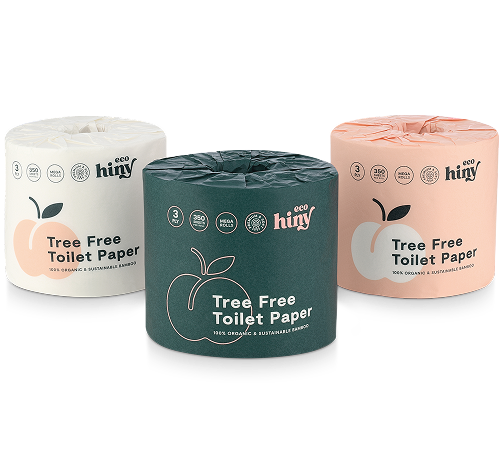
3-ply 250 Sheetsand 2x absorption
How are businesses redesigning products for sustainability without sacrificing convenience?
Many brands today are responding to the growing demand for sustainability by expanding sustainable products and services that offer the same level of convenience as traditional versions.
Adopting eco-friendly materials in both products and packaging is an environmentally smart step many businesses are starting with. Innovative packaging solutions, such as recyclable components and fully biodegradable materials, are ways to cut down on waste and appeal to consumers striving to live a sustainable lifestyle.
Subscription service represents another shift toward sustainable yet convenient consumption. Companies now offer refillable household products, such as personal care items, delivered directly to consumers, many with carbon-neutral shipping included.
How does ecoHiny support convenience and sustainability through its products?
ecoHiny is an innovative company focused on making sustainability easy for consumers by offering eco-friendly bamboo toilet paper.
As environmental concerns about deforestation and single-use products continue to grow, ecoHiny prides itself as a solution where convenience and sustainability meet! Bamboo is the superpower of our product’s environmental benefits. It’s a fast-growing, renewable resource that helps reduce the strain on forests that the traditional toilet paper industry intensifies.
ecoHiny’s bamboo toilet paper is designed to provide the same softness, reliability, and comfort as traditional toilet paper. There’s no need to compromise on quality or convenience! No major routine change is needed; making the switch is as simple as a few clicks. roll.
The packaging is also designed with the environment in mind. Every roll is wrapped and packaged in 100% recyclable material that is fully biodegradable.
ecoHiny makes it easy to adopt greener habits without disrupting your lifestyle. We offer a seamless subscription service that you can tailor to your household's needs. Choose the number of rolls and determine the frequency of delivery. When your needs change, you can easily adjust your options online.
We’re committed to empowering our customers to make positive environmental changes in their everyday lives. Switching to a sustainable version of toilet paper, an everyday necessity, is one of the easiest moves you can make to support sustainability and continue with your current level of convenience.
What are practical ways to balance convenience vs sustainability in your daily routine?
Balancing convenience and sustainability in your daily routine is achievable by making simple swaps. The key is to start with practical and manageable changes that fit your lifestyle.
One of the simplest strategies is to replace single-use items with reusable alternatives. Consider cloth shopping bags, stainless steel water bottles, or bamboo utensils. Choosing eco-friendly products, like biodegradable cleaning supplies or recycled paper goods, is another easy way to reduce your environmental footprint while maintaining convenience.
Budget-friendliness is another important consideration. Sustainable choices don’t have to be expensive. In fact, they’re often money-saving moves in the long run. Investing in durable, reusable products can save money over time, and simple habits like meal planning or reducing food waste benefit both your wallet and the environment!
Not every sustainable habit needs to be adopted all at once. Instead, focus on the changes that matter most to you or have the largest impact. By addressing the areas where your habits align with your values and needs, you’ll maximize your positive impact without feeling overwhelmed.
Looking for a simple first swap? Consider switching to ecoHiny bamboo toilet paper. It’s an option that gets rid of the unwanted waste and destruction through deforestation seen in the traditional toilet paper industry.
Embracing sustainability doesn’t have to mean sacrificing comfort or convenience in your daily life. By making thoughtful, small changes and choosing products like ecoHiny’s bamboo toilet paper, you can contribute to a healthier planet while still enjoying everyday ease.
Source:
- Peng, Lingxiao, et al. "Global trends and drivers of plastic packaging pollution." Nature Communications, vol. 15, no. 1, 2024, article 69016. Nature, https://www.nature.com/articles/s41467-026-69016-9.
- "Survey: Nearly Half of U.S. Consumers Say They Buy Sustainable Products." Trellis, 23 Oct. 2023, https://trellis.net/article/survey-nearly-half-of-u-s-consumers-say-they-buy-sustainable-products/.
- “Plastic Bag Facts.” Center for Biological Diversity, https://www.biologicaldiversity.org/programs/population_and_sustainability/sustainability/plastic_bag_facts.html.
- “Natural Resource Use & Environmental Impacts.” One Planet Network, https://www.oneplanetnetwork.org/SDG-12/natural-resource-use-environmental-impacts.
- Environmental and Energy Study Institute. "Industry & Manufacturing." EESI, https://www.eesi.org/topics/industry-manufacturing/description.
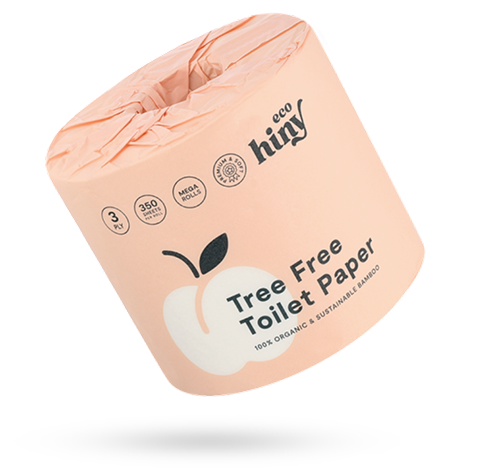
Premium Bamboo Toilet Paper
EcoHiny's 3-ply bamboo toilet paper.
From $39.99
Kind to you, Kind to the planet
Our mission is to save one billion trees by making the switch to ecoHiny.