
Contents
Key Points
- Traditional toilet paper production contributes significantly to deforestation and habitat destruction.
- Traditional manufacturing techniques can create harmful byproducts.
- Bamboo is a fast-growing, renewable resource that can be used successfully to produce paper products such as toilet paper.
- Switching to bamboo toilet paper is an easy and sustainable swap.
Let’s talk toilet paper.
Not exactly dinner-party conversation, but the reality is we all use it every single day, and most of us never think twice about where it comes from or where it goes.
It’s time to start giving it some thought because traditional toilet paper is a real problem for the planet.
Every year, millions of trees are cut down just to make something we literally flush away. It’s wasteful, it’s destructive to our forests, and it’s an environmental stressor to our waterways.
There’s a better way, and it’s bamboo!
Bamboo is not just a trendy environmental fad; it is genuinely one of the most sustainable materials on Earth.
If you’ve ever wondered whether switching your toilet paper actually makes a difference, it does! Your bathroom might be the perfect place to start making a real impact on the planet.
Why Is Bamboo a Sustainable Material?
Sustainability? It might just be bamboo’s superpower.
Unlike hardwood trees, which take decades to mature, bamboo is a type of grass that reaches its full height in just three to five years. Some species can even grow up to 35 inches in a single day! This rapid growth makes bamboo one of the fastest-renewing plant resources on the planet.
Another reason bamboo stands out is its unique root system. After harvesting, there is no need to replant it. Its underground root system sends up new shoots, allowing bamboo to regrow continuously without harming the soil. This means bamboo forests can be harvested repeatedly without damaging delicate soil ecosystems.
Bamboo is also a powerful partner to the planet. It produces 35% more oxygen than the same area of trees and soaks up plenty of carbon dioxide, making it an important ally in the fight against climate change. (1)
Bamboo also grows happily without pesticides or fertilizers, needs much less water than hardwood trees, and has a strong root system that helps prevent soil erosion. (2)
All these benefits make bamboo a truly sustainable choice, especially for single-use essentials. (Stay tuned for our favorite!)
Kind to you, Kind to the planet
Our mission is to save one billion trees by making the switch to ecoHiny.
Why Are Bamboo Products More Sustainable Than Tree-Based Products?
The production of traditional paper products contributes significantly to deforestation, with millions of acres of forest cleared annually. This habitat destruction threatens biodiversity and disrupts ecosystems on which countless species depend for survival.
In addition to protecting our forests, bamboo crop yields are abundant. A single acre of bamboo can produce significantly more usable material than an equivalent area of hardwood forest, requiring less land to meet the same demand. (3) This efficient land use reduces pressure on natural forests and helps preserve critical wildlife habitats.
Why Is Bamboo Toilet Paper Better for Eco-Friendly Toilet Paper Manufacturing?
Bamboo toilet paper starts with sustainable bamboo and keeps getting better.
Bamboo fibers are naturally long, strong, and flexible. When it comes to your toilet paper, these qualities are essential. The makeup of the fibers means you get a product that’s both soft and durable without needing extra processing or additives.
What happens during manufacturing is just as significant.
Traditional toilet paper bleaching often uses chlorine, which can produce toxic byproducts such as dioxins. (3) Not great for you, and definitely not great for the planet. The good news? Many bamboo toilet paper brands (like ecoHiny!) skip the toxic chemicals, using a gentler approach, which means keeping pollutants out of our waterways and away from your skin.
Why Is Bamboo Toilet Paper Biodegradable and Septic Safe?
Bamboo toilet paper's exceptional biodegradability stems from its natural fiber structure. Unlike traditional tree-based paper, bamboo fibers are less dense, allowing them to break down rapidly when exposed to water.
Within seconds of contact with moisture, bamboo toilet paper begins to disintegrate into fine particles that easily disperse through plumbing systems. This quick dissolution prevents clogs and ensures smooth passage through pipes, making it ideal for both residential and municipal water systems.
The septic-safe properties of bamboo toilet paper offer significant advantages for homes with this type of system. In septic tanks, bamboo fibers decompose efficiently without disrupting the delicate bacterial balance necessary for waste breakdown. The fibers require fewer chemicals to process and cause less accumulation than traditional toilet paper. (4)
3-ply 250 Sheetsand 2x absorption
Why Are Eco-Conscious Shoppers Choosing Bamboo Products?
Some eco-conscious consumers are paying attention. Many are actively rethinking everyday choices and demanding better options. Bamboo? It fits perfectly into a low-waste, high-impact, sustainable lifestyle.
In fact, the demand for bamboo products in the US is projected to grow from 28.7 billion in 2025 to 48.2 billion by 2035. This figure, generated by Future Market Insights, cites the rise in demand for eco-friendly household product alternatives as the main driver of bamboo product purchases. (5)
Bamboo products check the sustainability box, but consumers are choosing them for other reasons as well. Bamboo products tend to be durable, making them long-lasting and resulting in long-term savings.
Bamboo also possesses natural antibacterial properties that resist odors and bacterial growth. They’re versatile, biodegradable, lightweight, and have a unique aesthetic.
When it comes to toilet paper, bamboo adds a level of natural strength and softness unmatched by traditional brands. Chemicals and additives are required in hardwood pulp toilet paper to get the tactile feel and performance that bamboo provides naturally.
Why Does ecoHiny Use Bamboo for Its Sustainable Toilet Paper?
At ecoHiny, we believe we’re not just putting out a product; we’re making a statement about the importance of sustainability.
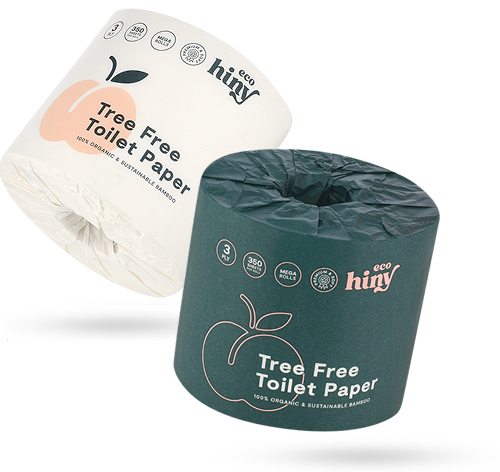
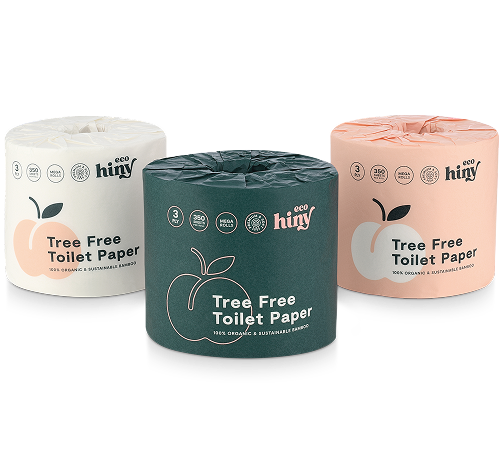
Our values are pretty straightforward. We strive to give customers a product they can feel genuinely good about using. Every roll of ecoHiny bamboo toilet paper means fewer trees cut down, less water wasted, and cleaner manufacturing processes. It’s a small swap in your daily routine that creates real, measurable impact!
When you choose ecoHiny, you’re not just buying TP; you’re promoting a more sustainable future with every flush.
Why Choosing Bamboo Supports a More Sustainable Future
Bamboo truly is a sustainability superhero. It grows fast, regenerates without replanting, produces more oxygen than trees, needs minimal water and zero pesticides, and breaks down beautifully in sewer and septic systems alike.
It’s better for forests, better for the climate, and better for your plumbing.
Switching to bamboo toilet paper is one of the easiest, most practical eco-swaps you can make. It’s a simple choice that adds up to real environmental impact over time.
If you’re ready to make your bathroom routine part of saving our planet, check out ecoHiny’s bamboo toilet paper today! Get a great product and gain the peace of mind that comes with knowing you’re helping to build a sustainable solution to the waste of traditional toilet paper.
Source:
- Li Liu, Linjiao Wang, Lukang Song, Maoyin Sheng,
Carbon sequestration law by phytoliths in the bamboo forests: Insights for the management of phytolith carbon sink,Global Ecology and Conservation, Volume 58, 2025, https://www.sciencedirect.com/science/article/pii/S2351989425000927. - Kuok, Kuok King et al. “Merits of bamboo utilization in earth preservation, water, and wastewater treatment: A mini review.” BioResources (2024): n. pag.
- "Why Bamboo Just Works Better Than Wood." The Environmental Blog, 17 Dec. 2025, www.theenvironmentalblog.org/2025/12/why-bamboo-just-works-better-than-wood/.
- "Is Bamboo Toilet Paper Septic Safe? What Homeowners Should Know." Anton's Plumbing and Gas, antonsplumbingandgas.com.au/.
- "Demand for Bamboo Products in USA | Global Market Analysis Report - 2035." Future Market Insights, Dec. 2025, www.futuremarketinsights.com/reports/united-states-bamboo-products-market.
Premium Bamboo Toilet Paper
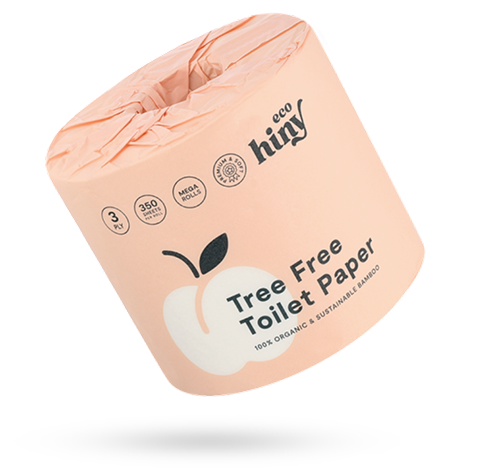
EcoHiny's 3-ply bamboo toilet paper.
From $39.99
Kind to you, Kind to the planet
Our mission is to save one billion trees by making the switch to ecoHiny.