
Contents
Key Points
- Bamboo is used in a variety of sustainable products due to its rapid growth, renewability, and minimal need for water, pesticides, and fertilizers.
- Bamboo is increasingly used in industries such as construction, textiles, paper products, and other everyday household items.
- Bamboo products are a high-impact, sustainable choice that leaves a lower environmental footprint.
Bamboo is emerging as a leading material in many industries. Its rapid growth, renewability, and impressive strength make it a practical replacement for traditional resources typically used in construction, textiles, and paper production.
Valued for its durability and various environmental benefits, bamboo brings us sturdy floors, silky-soft fabrics, and planet-friendly paper products.
At ecoHIny, we’re all about spreading the word about how sustainable bamboo is transforming products, lifestyles, and even the planet!
Here’s a look at how bamboo is helping an array of industries pave the way toward a greener and more responsible future.
What are the main uses of bamboo in sustainable products?
Bamboo’s uses in sustainable products span every industry from construction, textiles, paper, and packaging, powered by bamboo’s natural strength and eco-friendly features.
In construction, bamboo steps up as a sturdy, lightweight alternative to wood and steel, perfect for everything from flooring to scaffolding. When it comes to textiles, bamboo fibers produce soft, breathable fabrics for clothing, towels, and bedding. Bamboo pulp is used to make paper products like toilet paper and packaging, helping us save trees and shrink our environmental footprint.
Bamboo is versatile, sustainable, and a favorite for eco-friendly innovations in every industry!
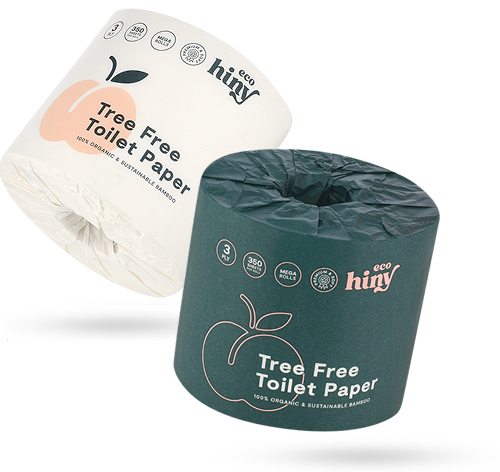
Kind to you, Kind to the planet
Our mission is to save one billion trees by making the switch to ecoHiny.
Why is bamboo considered a sustainable and durable material?
Bamboo is considered a sustainable and durable material because it grows rapidly, regenerates from its own roots after harvesting, and has significant tensile strength.
Unlike hardwood trees, which can take decades to mature, bamboo is one of the fastest-growing plants in the world. Some species can grow up to 3 feet per day! Most bamboo can be harvested in 3 to 5 years, making it highly renewable compared to traditional hardwood timber.
Bamboo can regenerate from its own root system without replanting. Once harvested, the plant continues to grow from the established root system. This helps prevent soil erosion and keeps soil ecosystems safe.
Bamboo is incredibly strong for its weight, and that comes down to something called tensile strength. Tensile strength refers to the amount of stress that a material can withstand before breaking. Some species of bamboo have a tensile strength comparable to steel! (1) Bamboo’s high tensile strength makes it a durable material for construction, furniture, and flooring.
How is bamboo used in construction and durable products?
Bamboo is used in construction and durable products as structural beams, flooring, panels, scaffolding, and furniture.
Durable bamboo products offer a resilient and attractive alternative to traditional hardwood. Bamboo’s natural tensile strength and flexibility make it ideal for scaffolding and structural beams, often outperforming wood in natural disaster-prone regions. (2)
When comparing bamboo to hardwood, bamboo stands out for its remarkable durability. High-quality bamboo flooring is highly resistant to wear and moisture, rivaling the most popular hardwoods used in flooring installations. (3)
Bamboo is also lighter, easier to work with, and less expensive to transport than steel or hardwood, further enhancing its appeal in sustainable construction practices. (4)
From an environmental perspective, bamboo stores large amounts of carbon, helping to offset emissions associated with construction, and its rapid regrowth after harvesting deters deforestation caused by the traditional timber industry.
Incorporating bamboo products and materials into construction practices means builders can reduce environmental impact and contribute to climate change mitigation.
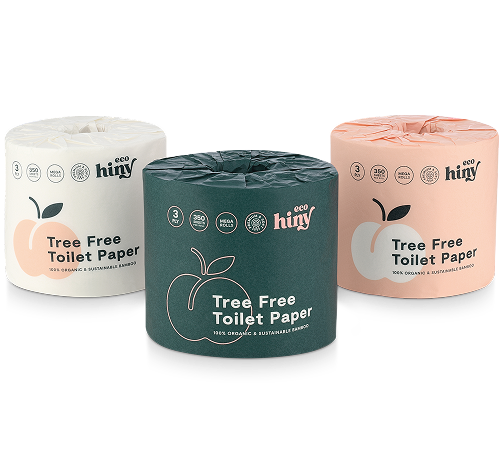
3-ply 250 Sheetsand 2x absorption
How is bamboo used in textiles and everyday products?
Bamboo is processed into soft, breathable fibers for textiles like clothing and bedding, and is also used to make many everyday household products.
Bamboo products like fabric are used to create soft, breathable clothing, towels, and bedding that are naturally hypoallergenic and moisture-wicking. Compared to cotton, a common organic fiber for clothing, bamboo requires less water, uses fewer pesticides, and grows faster.
There is an abundance of bamboo-based products for your home that offer eco-friendly alternatives to single-use items or products that use plastic.
Bamboo items you might not know existed:
- Toothbrushes
- Hair brushes and combs
- Cotton swabs
- Razors
- Sunglasses
- Straws
- Bicycles
- Phone cases
Bamboo products can help everywhere in your home! (Our favorite? It’s coming up next.)
How is bamboo used in paper products like toilet paper?
Bamboo can be processed into soft, strong fibers to produce eco-friendly toilet paper. When it’s made from bamboo, it's a biodegradable, sustainable, and reliable alternative to traditional toilet paper.
Bamboo pulp comes from processing fast-growing bamboo stalks, called culms, into fibers, while the traditional toilet paper industry relies on the destruction of our hardwood forests to fulfill its need for pulp.
Because of its naturally long fibers, bamboo paper is soft and strong, leaving no need for a toxic chemical softening process that sometimes accompanies traditional toilet paper production.
As an eco-friendly bamboo toilet paper company, at ecoHIny, we use bamboo to our advantage.
Our toilet paper is always 100% tree-free. By using rapidly renewable bamboo, we take deforestation out of the equation. We also guarantee that no dyes, fragrances, PFSAS, or other toxic chemicals can be found in our formula.
When it comes to packaging, our rolls are wrapped and packed in recyclable, fully biodegradable paper, and they arrive at your door regularly using carbon-neutral shipping practices.
Why is bamboo toilet paper a high-impact sustainable choice?
Bamboo toilet paper is a high-impact, sustainable choice due to its incredible environmental benefits.
Toilet paper is an everyday essential, but buying traditional brands comes with a costly environmental impact. Traditional toilet paper production contributes to deforestation, consumes large amounts of water and energy, and generates significant landfill waste.
With millions reaching for toilet paper every day, even a simple switch can spark a major positive impact for our planet!
Switching to bamboo toilet paper brings instant sustainable benefits. Bamboo is one of the fastest-growing plants on the planet, thriving with minimal water and no pesticides. Its rapid renewability and ability to regrow after harvesting help protect precious forests and keep ecosystems healthy.
Bamboo toilet paper is fully biodegradable, breaking down quickly after use and lightening the load on our landfills. It’s perfect for anyone aiming for a low-waste lifestyle.
By choosing ecoHiny’s bamboo toilet paper, you’re supporting a brand that’s passionate about delivering real sustainable benefits. This simple switch makes it easy for households to reduce their ecological footprint without sacrificing quality or comfort.
Source:
- Huang, Yan, Junchao Liang, and Yan Xiao. "Design Value of Tensile Strength of Raw Bamboo." BioResources, vol. 14, no. 2, 2019, pp. 3313-3326. North Carolina State University, https://bioresources.cnr.ncsu.edu/resources/design-value-of-tensile-strength-of-raw-bamboo/.
- World Economic Forum. "How bamboo is shaping the future of construction and affordable housing." World Economic Forum, 16 Feb. 2023, https://www.weforum.org/stories/2023/02/bamboo-construction-housing-climate/.
- Scientific American. "Is Bamboo Furniture Really Better for the Environment?" Scientific American, 23 Mar. 2011, https://www.scientificamerican.com/article/is-bamboo-furniture-better/.
- International Association of Certified Home Inspectors (InterNACHI). "Bamboo Construction Inspection." InterNACHI, https://www.nachi.org/bamboo-construction-inspection.htm.
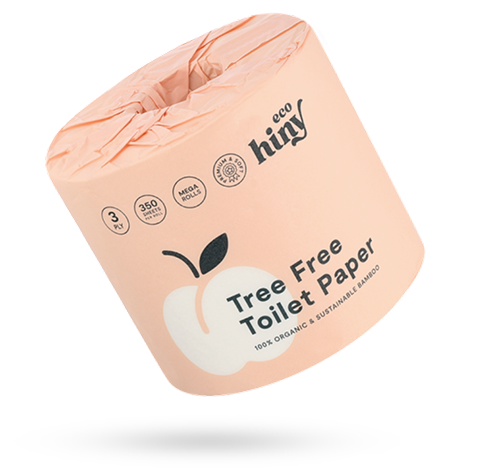
Premium Bamboo Toilet Paper
EcoHiny's 3-ply bamboo toilet paper.
From $39.99
Kind to you, Kind to the planet
Our mission is to save one billion trees by making the switch to ecoHiny.