
Contents
Key Points
- Bamboo-based toilet paper is more environmentally friendly than traditional hardwood-pulp toilet paper
- Bamboo is a highly sustainable resource: it grows rapidly, regenerates from its roots, requires minimal water and no chemical fertilizers or pesticides, and helps preserve soil.
- Around 35 bamboo species are considered optimal for paper production.
- Clumping bamboo is favored for toilet paper production due to its controlled growth and minimal impact on local ecosystems.
Bamboo is becoming a go-to green game-changer for eco-friendly families. There are bamboo products for virtually every room in your home. From flooring to furniture and utensils to textiles, bamboo offers a sustainable solution that makes meeting your environmental goals even easier.
Softness, strength, and sustainability all start with the species of bamboo selected. At ecoHiny, we’re passionate about sharing exactly what goes into every roll. Let’s take a look at bamboo varieties, discover how they’re transformed into tissue, and see what makes ecoHiny’s bamboo toilet paper a standout sustainability superstar.
Why are certain bamboo species preferred?
Not every bamboo is built for the bathroom. When it comes to crafting high-quality toilet paper, tissue makers carefully select bamboo species with specific characteristics that ensure both product performance and sustainability.
The ideal bamboo for toilet tissue must possess a high cellulose content, which is essential for creating paper that is not only soft and gentle on the skin but also strong enough to be durable in use. (1)
Additionally, manufacturers prioritize fast-growing, renewable bamboo species that can be harvested efficiently and regrow quickly, ensuring a continuous and eco-friendly supply.
By focusing on sustainable and responsibly managed bamboo crops, it’s possible to offer a quality toilet paper product while supporting sustainable forestry practices.
Kind to you, Kind to the planet
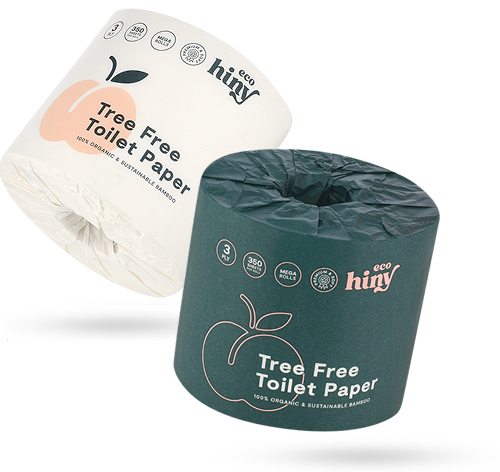
Our mission is to save one billion trees by making the switch to ecoHiny.
What are the main types of bamboo?
Bamboo comes in two main types: clumping and running.
Clumping bamboo grows in neat, tidy clusters and spreads slowly, making it manageable for sustainable growers. It stays put, so it won’t take over local ecosystems.
Running bamboo, on the other hand, lives up to its name. It spreads fast and far through underground rhizomes, which can make it tough to tame and sometimes invasive. (2)
This difference matters, especially for products like toilet paper. Clumping bamboo’s predictable, non-invasive growth makes it the eco-friendly favorite for responsible land management. It protects native habitats and keeps local flora flourishing! Running bamboo’s wild ways can threaten ecosystems, so it’s not the top pick for sustainable sourcing.
Choosing clumping bamboo means supporting sustainable harvesting and smart land management, so it’s possible to get eco-friendly toilet paper without risking runaway roots or harming local habitats.
Why is bamboo a preferred material for toilet paper?
Bamboo is an eco-champion because it grows at an incredible speed, and it renews itself naturally. It also requires less water and no chemical fertilizers or pesticides to thrive. As you’ll see, that’s just the start of why bamboo is preferable to harvesting traditional hardwood pulp for toilet paper products.
Bamboo thrives where other crops can’t, growing strong in tough soils and diverse climates. Unlike hardwood trees that take decades to mature, bamboo is ready to harvest in just three to five years.
After harvesting, bamboo regenerates from its own root system, eliminating the need for replanting and preserving soil integrity while preventing erosion. This natural regrowth means less land disturbance and soil ecosystems remaining intact, resulting in a much lighter overall environmental footprint.
Bamboo’s efficient growth requires less irrigation and fewer chemical fertilizers or pesticides, contributing to cleaner waterways and healthier ecosystems. (3)
Ultimately, bamboo’s unique growth and renewal characteristics make it one of the most sustainable choices for eco-friendly living. By choosing bamboo-based products, consumers help protect our planet’s precious forests and support a more sustainable, eco-friendly future, especially when it comes to everyday essentials like toilet paper.
Which bamboo species are best for toilet paper?
Experts have identified approximately 35 bamboo species as optimal for pulp and paper. Their cellulose content, fiber characteristics, and sustainability all contribute to their use in the industry.
Some of these species include:
- Dendrocalamus asper
- Bambusa vulgaris
- Bambusa blummeana
- Bambusa nutans
- Dendrocalamus strictus
These species, and others, are identified as conducive to making paper products because their makeup allows for them to be chipped and pulped using a very similar process to that of hardwood trees, making them a perfect replacement. (4)
3-ply 250 Sheetsand 2x absorption
How is bamboo turned into toilet paper?
Turning bamboo into toilet paper is a simple, sustainable process. Here’s a detailed look.
The process of converting bamboo into paper begins with harvesting mature bamboo culms, which are then chipped into small pieces. These chips undergo a pulping process where they are cooked to break down lignin and separate the cellulose fibers.
After pulping, the mixture is washed to remove impurities. The resulting pulp is then inspected and refined to ensure quality. Next, the bamboo pulp is diluted with water and spread onto a mesh screen to form a thin mat.
As water drains away, the mat of fibers becomes a wet sheet, which is pressed to remove excess moisture. Finally, the sheet is dried and rolled into large reels, producing finished bamboo paper ready for cutting. (5)
Is bamboo toilet paper more sustainable than regular paper?
Absolutely! Bamboo toilet paper is a more sustainable option compared to traditional hardwood-pulp toilet paper, thanks to bamboo’s remarkable growth and environmental properties.
Bamboo matures at an astonishing rate, reaching harvestable age in as little as 3 years. Trees used for traditional toilet paper can take decades to grow. This rapid regrowth allows bamboo to be harvested more frequently, ensuring a renewable supply that doesn’t exhaust the natural and finite resources in our world’s forests.
When it comes to environmental footprint, bamboo outperforms hardwood trees in several ways. It uses significantly less water to establish, making it ideal for water-conscious production. Bamboo also absorbs more carbon dioxide per hectare than most tree species, helping to offset greenhouse gas emissions and support climate goals. Its deep root system stabilizes soil and reduces erosion, while its natural resistance to pests means fewer chemical fertilizers and pesticides are needed.
Another major advantage is biodegradability. Bamboo toilet paper breaks down quickly and safely in both septic systems and municipal sewer systems, reducing the risk of clogs and the environmental harm of it ending up in our waterways and landfills.
By choosing bamboo toilet paper, eco-conscious consumers can significantly reduce their carbon, water, and waste footprint!
What makes ecoHiny bamboo toilet paper different?
ecoHiny sets itself apart as a brand fully dedicated to protecting the environment and supporting eco-conscious consumers at every stage of their journey toward sustainable living.
Unlike traditional toilet paper brands, ecoHiny starts with a commitment to responsible sourcing, partnering with the Forest Stewardship Council, which practices ethical land management and prioritizes biodiversity. Selected bamboo, chosen for its softness, strength, and rapid regrowth, is used in production, ensuring that neither quality nor sustainability is compromised.
Sustainability doesn’t stop at sourcing. ecoHiny’s manufacturing process is designed to minimize environmental impact from start to finish. The company uses a toxic chemical-free pulping and bleaching process, eliminating harsh substances that can harm water supplies and ecosystems.
Minimal waste is produced throughout production, and every roll comes in fully biodegradable, recyclable packaging, reducing landfill burden and encouraging a circular economy. ecoHiny’s eco-friendly approach extends to our shipping practices and to our ongoing efforts to support forest conservation initiatives.
By putting both planet and product first, ecoHiny is providing a truly eco-conscious bamboo toilet paper! Choosing ecoHiny means supporting a company that values environmental responsibility as highly as product quality.
Make the smart, sustainable switch today and experience the difference. Your home (your hiny) and the planet will thank you!
Source:
- Almalki, Afnan, et al. “The Impact of Social Media on Mental Health: A Systematic Review.” Journal of Health and Social Sciences, vol. 4, 2024, pp. 100087. ScienceDirect, https://www.sciencedirect.com/science/article/pii/S2773139124000144.
- Lowe, Beau. “Bamboo Growth and Control.” ACES: Alabama Cooperative Extension System, 25 May 2021, https://www.aces.edu/blog/topics/forestry-wildlife/bamboo-growth-and-control/.
- Gupta, Rajnish, et al. “Potential Health Benefits of Bamboo Shoots: An Overview.” Journal of Ayurveda and Integrative Medicine, vol. 15, no. 1, 2024, p. 100761. PMC, https://pmc.ncbi.nlm.nih.gov/articles/PMC12526147/.
- Chauhan, S. S. “Bamboo: An Alternative Raw Material for Papermaking.” Paperonweb, https://www.paperonweb.com/Articles/bamboo.pdf.
- Almalki, Afnan, et al. “The Impact of Bamboo as a Sustainable Construction Material: A Review.” Green Materials, vol. 4, 2024, article no. 100014, https://www.sciencedirect.com/science/article/pii/S2773139124000144.
Premium Bamboo Toilet Paper
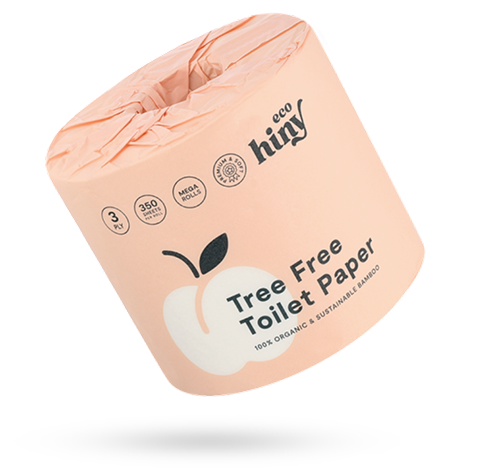
EcoHiny's 3-ply bamboo toilet paper.
From $39.99
Kind to you, Kind to the planet
Our mission is to save one billion trees by making the switch to ecoHiny.