

Contents
Key Points
- Scope 1, 2, and 3 emissions are categories used to measure and report a company’s greenhouse gas output.
- Accurately measuring all three scopes is essential for businesses aiming for sustainability and climate responsibility.
- Lifecycle assessments help companies map emissions at every stage of a product’s life, from raw material sourcing to disposal.
- Companies like ecoHiny commit to transparency and sustainability by assessing and addressing emissions throughout the entire product lifecycle.
- Consumers can make more sustainable choices by supporting businesses that are transparent about their emissions and take steps to reduce them.
With climate change top of mind, more and more businesses are stepping up to track and shrink their carbon footprints. A big part of this effort is learning how to measure and report different types of emissions.
These are usually grouped into three categories: Scope 1, Scope 2, and Scope 3. Together, they help consumers see the full story of a company’s impact on the planet.
When companies understand and report all three types of emissions, they’re taking real steps toward sustainability and climate responsibility! Tools like the Greenhouse Gas Protocol and guidance from the EPA help businesses measure their impact and find ways to improve.
Being open about emissions also helps build trust with customers who care about the planet.
At ecoHiny, we’re proud to be part of this movement. Our commitment to the environment includes every step, from how we source our bamboo to how our toilet paper is made, shipped, and even what happens to it when you flush.
By understanding our emissions at every stage, and encouraging consumers to take note, we believe we’re making an impact on the toilet paper industry.
What Are Scope 1 Emissions (Direct Emissions)?
Scope 1 emissions refer to direct greenhouse gas emissions that come from sources owned or controlled by a company. According to the United States Environmental Protection Agency, these emissions include activities like fuel combustion, emissions from company vehicles, and on-site manufacturing processes. (1)
Because these emissions are under a company’s direct control, they are typically the most straightforward to measure and manage.
Common examples of Scope 1 emissions are:
- Burning fuel in company-owned equipment or vehicles (such as delivery trucks, forklifts, or generators)
- Operating on-site manufacturing facilities
- Heating warehouses or offices with gas furnaces or boilers
Scope 1 emissions are a fundamental part of a company’s total carbon footprint. While they may be smaller in volume compared to indirect emissions, which we’ll cover next, they are critical to address because they represent emissions a business can directly reduce or eliminate.
Measuring and managing these direct emissions is often the first step for companies that want to take climate action seriously. By identifying and reducing Scope 1 emissions, businesses demonstrate their true commitment to sustainability.
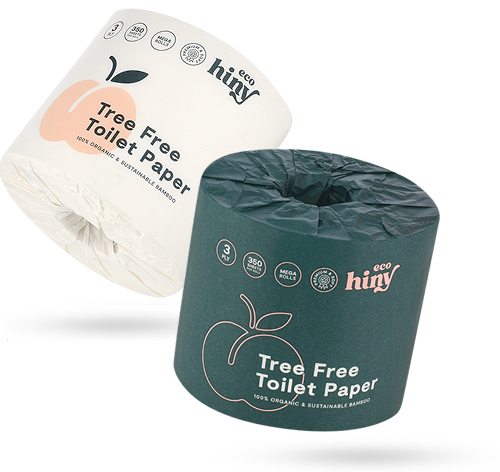
Kind to you, Kind to the planet
Our mission is to save one billion trees by making the switch to ecoHiny.
What Are Scope 2 Emissions (Indirect Emissions from Energy)?
Scope 2 emissions are the indirect greenhouse gases that come from the electricity, steam, heating, or cooling a company buys. Even though these emissions happen at the power plant or energy facility, they still count toward the company’s carbon footprint.
The main difference between Scope 1 and Scope 2 is who’s in control. Scope 1 covers what a company owns or operates directly, while Scope 2 is all about the energy a company buys to keep things running.
According to the Greenhouse Gas Protocol, “Nearly 40% of global greenhouse gas emissions can be traced to energy generation, and half of that energy is used by industrial or commercial entities.” (2) This clearly indicates the importance of Scope 2 emissions when considering the global impacts of greenhouse gases.
To lower Scope 2 emissions, many companies are switching to renewable energy, making their operations more efficient, or even supporting forest restoration projects.
What Are Scope 3 Emissions (Upstream and Downstream Emissions)?
Scope 3 emissions capture all other indirect greenhouse gas emissions that occur throughout a company’s value chain, beyond its own operations. These are classified into two main categories:
Upstream emissions
Indirect emissions that happen before a company receives goods or services, such as the extraction and production of raw materials, manufacturing by suppliers, transportation to the company, and waste generated by suppliers.
Downstream emissions
Indirect emissions that occur after a company sells its products or services. This includes emissions from product distribution, use of the product by customers, disposal, recycling, and end-of-life treatment. (3)
Scope 3 emissions usually account for more than 70% of a company’s carbon footprint, so it’s integral they’re addressed to enact meaningful environmental change. (4)
Scope 3 emissions are typically the largest category because they capture the full life cycle of products and services. Unlike Scope 1 and 2, which focus on a company’s direct operations and purchased energy, Scope 3 reflects the entire supply chain and product journey.
For example, in a company that produces a consumer good, emissions from harvesting raw materials, manufacturing by suppliers, product transportation, and consumer disposal can be substantial.
Measuring and managing Scope 3 emissions is challenging because it requires collaboration and data collection from a wide range of suppliers, logistics providers, distributors, retailers, and customers. (5)
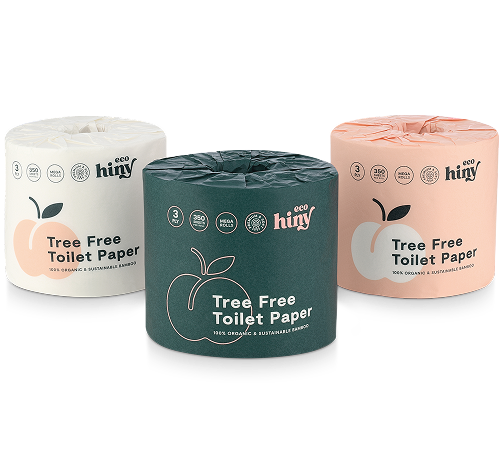
3-ply 250 Sheetsand 2x absorption
How Do Scope 1, 2, and 3 Emissions Apply to Consumer Products Like ecoHiny?
A lifecycle assessment is a method used to evaluate the environmental impacts associated with every stage of a product’s life. (6) By mapping Scope 1, 2, and 3 emissions across the entire product lifecycle, companies can identify where carbon emissions occur and target the most effective reduction strategies.
When looking at a single product, you add up the emissions from every stage of its life. That means direct emissions from making the product (Scope 1), indirect emissions from the energy used (Scope 2), and all the upstream and downstream Scope 3 emissions.
Upstream emissions can be a big deal for consumer products because they include everything from growing and harvesting raw materials to processing them. For ecoHiny, that means assessing the sustainability of our bamboo crops, including fertilizers, land use, water, equipment, and harvesting.
Downstream emissions are everything that happens after our product leaves our hands, like shipping to our customers, how the product is used, and what happens when it’s flushed or our packaging is recycled.
At ecoHiny, we do a full lifecycle assessment for our bamboo toilet paper. From bamboo growth and harvest, production and packaging, to shipping and delivery, we ensure that from the bamboo stand to your bathroom, our product has a lower environmental impact.
Understanding Scope 1, 2, and 3 Emissions Is Key to Climate Action
In today’s climate-conscious world, it’s more important than ever to understand the full scope of a company’s carbon footprint. Scope 1, Scope 2, and Scope 3 emissions all work together to give a complete picture of environmental impact.
Scope 1 covers direct emissions from sources a company owns or controls. Scope 2 is about indirect emissions from the energy a company buys. Scope 3 includes all the other indirect emissions throughout the value chain. If companies focus only on direct emissions, they miss out on tackling the biggest climate impacts, especially those that produce consumer goods.
Lifecycle consideration is critical for consumer product manufacturing and distribution. By evaluating every stage, eco-conscious companies can embark on their best opportunities to reduce carbon.
At ecoHiny, we take this holistic approach to heart! Our commitment to sustainability covers everything, from sourcing bamboo responsibly and making our products efficiently, to thoughtful shipping, delivery, and what happens after you use our toilet paper.
We’re focused on reducing emissions across our whole value chain because it’s part of our broader mission: to offer a truly lower environmental-impact, eco-friendly bamboo toilet paper that helps you make a simple and sustainable choice every day.
When you choose ecoHiny, you’re not just buying toilet paper; you’re part of a movement toward a more transparent, accountable, and sustainable future.
Source:
- United States Environmental Protection Agency. “Scope 1 and Scope 2 Inventory Guidance.” EPA, 15 Sept. 2023, https://www.epa.gov/climateleadership/scope-1-and-scope-2-inventory-guidance.
- Greenhouse Gas Protocol. “Scope 2 Guidance.” GHG Protocol, World Resources Institute, https://ghgprotocol.org/scope-2-guidance.
- United States Environmental Protection Agency. “Scope 3 Inventory Guidance.” EPA, https://19january2021snapshot.epa.gov/climateleadership/scope-3-inventory-guidance_.html.
- UN Global Compact Network UK. “Scope 3 Emissions.” UN Global Compact Network UK, https://www.unglobalcompact.org.uk/scope-3-emissions/.
- O’Leary, Liz. “Scope 3 Emissions: The Top Supply Chain Sustainability Challenge.” MIT Sloan School of Management, 25 Apr. 2023, https://mitsloan.mit.edu/ideas-made-to-matter/scope-3-emissions-top-supply-chain-sustainability-challenges.
- U.S. General Services Administration. “Life Cycle Assessment.” GSA, https://www.gsa.gov/governmentwide-initiatives/federal-highperformance-buildings/highperformance-building-clearinghouse/integrative-design-strategies/life-cycle-perspective/life-cycle-assessment.
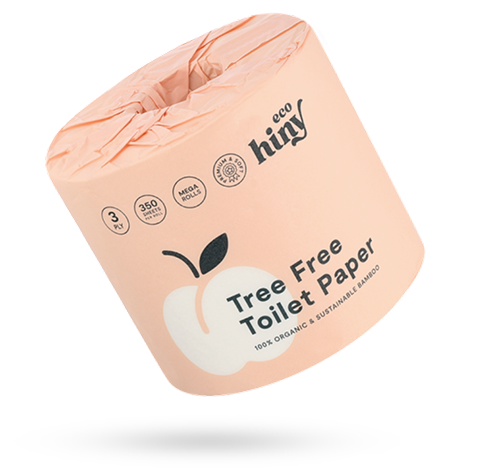
Premium Bamboo Toilet Paper
EcoHiny's 3-ply bamboo toilet paper.
From $39.99
Kind to you, Kind to the planet
Our mission is to save one billion trees by making the switch to ecoHiny.